
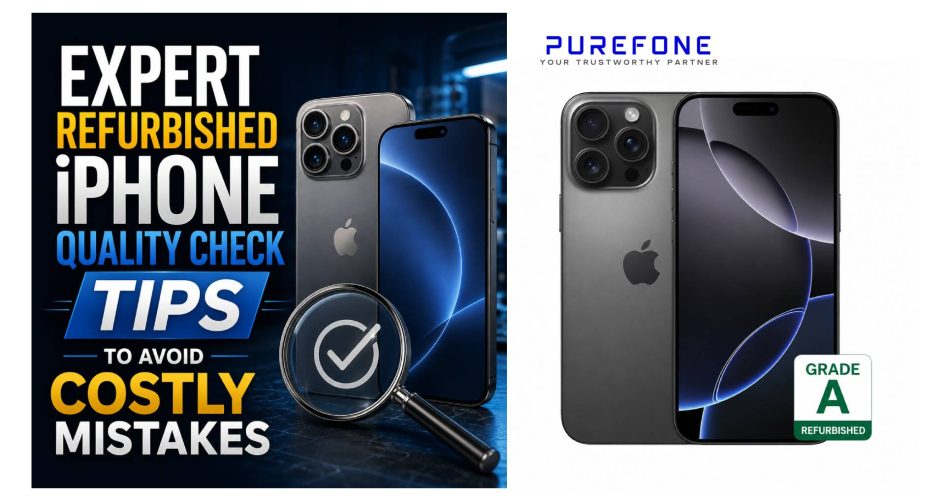
The global market for pre-owned mobile devices continues to expand at an unprecedented rate, driven by corporate sustainability goals and the need for cost-effective technology deployment. For wholesalers and businesses procuring devices in bulk, the stakes are significantly higher than for individual consumers. A single error in a refurbished iPhone quality check can lead to substantial financial losses, eroded client trust, and logistical nightmares when hundreds of units fail simultaneously.
Establishing a rigorous protocol for vetting suppliers and inspecting inventory is not merely a precaution; it is a fundamental pillar of a successful B2B strategy in the wireless sector. As the gap between new and used device performance narrows, the demand for high-quality refurbished iPhones for employee fleets and resale has surged, making thorough inspection the primary differentiator between profitable ventures and costly liabilities.
Navigating the secondary market requires a shift in perspective from simple functionality to long-term reliability and brand consistency. Wholesale buyers must look beyond the surface, understanding that a device powering on does not guarantee it will withstand the rigors of daily business use or meet the expectations of end-users seeking a premium experience. This necessitates a comprehensive approach that integrates a refurbished iPhone buying guide with technical diagnostic tools. The complexity increases when customization requests, such as corporate engraving or specialized software configurations, are involved. These added processes require a pristine hardware foundation, making the initial quality assessment even more critical to ensure that the base device is capable of undergoing further modifications without failure.
The financial implications of overlooking quality assurance are profound and multifaceted. Returns, warranty claims, and the administrative burden of managing defective inventory can quickly consume the profit margins of wholesale transactions. Furthermore, in the B2B environment, reputation is a currency that is difficult to earn but easy to lose.
Delivering a batch of devices with inconsistent battery life or hidden functional defects damages business relationships and can result in the loss of lucrative contracts. Therefore, implementing a standardized refurbished iPhone inspection checklist is an investment in risk management. It ensures that every unit delivered meets a specific standard of excellence, thereby protecting the buyer’s brand and ensuring satisfaction for the final end-user, whether they are an employee or a retail customer.
Looking ahead, the intersection of technology and circular economy principles is reshaping the procurement landscape. Industry projections for 2025 indicate a tightening of supply chains for high-quality cores, driving the need for precise grading standards. By 2026, market analysts predict that enterprise procurement of refurbished devices will become the dominant model as businesses prioritize operational efficiency over the prestige of unboxing new hardware. In this context, the ability to expertly assess the condition of a refurbished iPhone becomes a competitive advantage. It empowers wholesalers to price accurately, negotiate confidently with suppliers, and deliver products that offer genuine value and longevity in a competitive marketplace.
1. Why is a Rigorous Refurbished iPhone Quality Check Essential for Wholesale Success?
Implementing a robust framework for evaluating used devices is the cornerstone of maintaining inventory integrity in the wholesale mobile market. The secondary market is often flooded with units that are “cosmetically refreshed” but suffer from deep-seated hardware issues that are not immediately visible during a cursory glance. A rigorous quality check process serves as a filter, separating high-value assets from potential liabilities. For wholesalers dealing in large volumes, even a small percentage of defective units can translate into massive operational disruptions and costs. Establishing a zero-tolerance policy for specific defects ensures that the inventory remains premium-grade, which is essential for maintaining a competitive edge and fostering long-term business relationships built on trust and reliability.
The primary driver for stringent quality control is the direct correlation between device health and customer retention rates. In the B2B sector, buyers are often equipping entire teams or stocking retail shelves, meaning consistency is non-negotiable. If a company deploys a batch of iPhones and several experience connectivity issues or battery failures within weeks, the procurement department faces immediate backlash. This dissatisfaction often leads to contract terminations and a tarnished reputation that can hinder future sales.
By prioritizing a comprehensive refurbished iPhone quality check, wholesalers safeguard their clients against these operational hiccups, thereby positioning themselves as reliable partners rather than mere commodity vendors. This level of diligence is particularly critical when the devices are intended for customization, as any underlying hardware flaw will be exacerbated by the addition of branding or specific software loads.
Furthermore, the economic argument for thorough inspection is underscored by the rising costs of warranty servicing and reverse logistics. Processing a return is significantly more expensive than preventing a defective unit from entering the inventory in the first place. When a device fails in the field, the wholesaler must absorb the cost of shipping, diagnosis, repair, and potential replacement.
These hidden costs can silently erode profit margins, turning a seemingly good deal into a financial loss. A structured inspection protocol acts as a financial buffer, identifying issues before the product leaves the warehouse. This proactive approach minimizes the total cost of ownership for both the buyer and the end-user, ensuring that the economics of the refurbished iPhone buying guide remain favorable and sustainable in a high-volume, low-margin environment.
Beyond immediate financial protection, rigorous quality assurance is essential for compliance with evolving industry standards and regulations. As the market matures, there is an increasing push for standardized grading terminology and transparency regarding device history. Wholesalers who adopt meticulous inspection practices are better prepared to meet these regulatory demands and provide the detailed documentation that enterprise clients require.
This includes verifying that devices are free from iCloud locks, have not been reported as lost or stolen, and possess genuine, non-counterfeit components. In an era where supply chain transparency is paramount, a commitment to quality serves as a powerful marketing tool, assuring clients that every unit has been vetted to the highest possible standards before being offered for sale or deployment.
1.1 How Market Trends in 2025 Impact Quality Standards
The landscape of the refurbished smartphone industry is undergoing a significant transformation as it enters the mainstream of corporate procurement strategies. In 2025, the stigma surrounding used electronics has virtually vanished among forward-thinking businesses, leading to a surge in demand that is reshaping quality benchmarks.
This shift is driven by a combination of economic prudence and aggressive sustainability targets, compelling companies to seek out reliable alternatives to new devices without compromising on performance. Consequently, wholesalers are responding by elevating their refurbishment protocols to match, and in some cases exceed, the quality expectations traditionally reserved for brand-new hardware. This trend necessitates a more granular approach to the refurbished iPhone quality check, focusing on longevity and enterprise-grade durability rather than just basic functionality.
One of the defining trends of 2025 is the integration of advanced diagnostic automation into the refurbishment workflow. Manual inspection, while still necessary for cosmetic grading, is increasingly being supplemented or replaced by AI-driven software that can detect subtle hardware anomalies invisible to the human eye. These tools can analyze battery health patterns, stress test processors, and verify touch screen sensitivity with a level of precision that ensures uniformity across large batches.
For wholesale buyers, this means that the “Grade A” label must now imply a consistent, data-backed standard of performance. The reliance on such technology allows suppliers to scale their operations while maintaining quality, ensuring that the refurbished iPhone buying guide reflects a modernized, tech-forward process that minimizes human error and subjectivity.
Another critical factor influencing quality standards is the extended lifecycle of software support provided by manufacturers. As iPhones remain viable for longer periods, the expectations for the physical condition of older models have risen. Businesses deploying these devices expect them to perform reliably for several years, despite being pre-owned. This places a renewed emphasis on the integrity of critical components such as the charging port, speakers, and microphone assemblies, which are prone to wear and tear.
Wholesalers must adapt their inspection checklists to prioritize these high-wear areas, understanding that a device with a perfect screen but a faulty charging port is essentially useless for a mobile workforce. The 2025 market demands holistic quality, where every aspect of the device’s functionality is scrutinized to ensure it meets the rigorous demands of daily professional use.
Sustainability certifications and circular economy audits are also becoming pivotal in defining quality. Large enterprise clients often require proof that their procurement partners adhere to responsible e-waste management and ethical refurbishment practices. A comprehensive refurbished iPhone quality check now includes verifying the origin of replacement parts and ensuring that hazardous materials are disposed of correctly. This administrative layer of quality assurance adds value to the wholesale transaction, as it helps end clients meet their own Environmental, Social, and Governance (ESG) goals. Therefore, quality in 2025 is not just about the device working; it is about the integrity of the entire supply chain and the ethical assurance that the product contributes positively to global sustainability efforts.
1.2 Why Defective Units Erode Wholesale Profit Margins
The presence of defective units within a wholesale inventory is a silent profit killer that can destabilize an otherwise healthy business model. When purchasing in bulk, the assumption is often that economies of scale will absorb the cost of a few bad units. However, in reality, the cumulative impact of defects can be devastating. Every defective device that slips through the net triggers a chain reaction of costs, from customer support interactions to return shipping fees and restocking labor.
For wholesalers operating on thin margins, these unexpected expenses can quickly wipe out the profits generated by the sale of functional units. A robust refurbished iPhone quality check is essentially an insurance policy against this profit leakage, ensuring that the revenue realized from sales translates directly to the bottom line.
Beyond the direct costs of returns and repairs, defective units inflict severe damage through opportunity cost. When a business resources are tied up managing warranty claims and troubleshooting issues, they cannot be focused on growth activities such as sourcing new inventory or expanding into new markets. The time spent negotiating credits with suppliers or explaining failures to clients is time lost. Furthermore, if a significant portion of a shipment is found to be substandard, the wholesaler may face a cash flow crisis while waiting for replacement stock.
This disruption highlights the importance of a meticulous refurbished iPhone buying guide, which serves as a roadmap for avoiding suppliers with high defect rates and ensuring that capital is invested in inventory that moves quickly and reliably.
The reputational damage caused by defective units is perhaps the most insidious threat to profit margins. In the wholesale industry, word travels fast. A buyer who receives a batch of iPhones with a high failure rate is unlikely to return for a second purchase and is highly likely to share their negative experience with peers. This loss of future business represents a significant, long-term reduction in potential revenue.
For wholesalers specializing in customization and corporate solutions, the stakes are even higher. A customized device with a defect cannot be resold to another client without significant rework, often rendering it total scrap. Therefore, the cost of a defect is multiplied when custom logos or laser engravings are involved, making the initial refurbished iPhone inspection checklist an absolute necessity for financial preservation.
Moreover, defective units complicate inventory management and forecasting. Accurate stock levels rely on the certainty that the inventory on hand is sellable. If a warehouse contains a hidden percentage of non-functional devices, fulfillment projections become inaccurate, leading to stockouts when orders are placed. This forces the wholesaler to scramble for replacement stock, often at higher spot prices, to meet customer obligations. This reactive procurement is typically more expensive than planned bulk buying. By enforcing strict quality control measures at the point of intake, wholesalers maintain the integrity of their inventory data, allowing for smoother operations and more predictable financial planning. Ultimately, the cost of prevention is always lower than the cost of correction in the high-volume mobile device trade.
1.3 How 2026 Projections Shape Current Buying Strategies
Forward-looking wholesalers are already adjusting their procurement strategies based on the projected market dynamics of 2026. Industry forecasts suggest that the supply of high-quality, late-model iPhones will tighten as consumers hold onto their devices for longer periods, delaying the influx of used cores into the recycling stream. This anticipated scarcity means that the ability to identify and secure premium inventory now will be a decisive competitive advantage in the near future. Consequently, current buying strategies must evolve to prioritize relationships with suppliers who demonstrate consistent adherence to a rigorous refurbished iPhone quality check. Locking in reliable sources of Grade A inventory before the supply crunch ensures continuity of supply and stabilizes pricing structures against future volatility.
The projections for 2026 also indicate a surge in demand for devices capable of supporting advanced enterprise features such as augmented reality (AR) and high-bandwidth 5G applications. As these technologies become more integrated into business workflows, the technical specifications required for a “viable” refurbished device will rise. Wholesalers must therefore future-proof their inventory by favoring models with robust processing power and modern connectivity capabilities, even if the immediate demand is focused on older, cheaper models.
A dynamic refurbished iPhone buying guide will account for these technological shifts, advising buyers to weigh the future resale value and utility of devices against their current acquisition cost. This strategic foresight prevents the accumulation of obsolete inventory that will be difficult to move as software requirements become more demanding.
Another significant projection is the formalization of the “Refurbished as a Service” (RaaS) model, where businesses lease fleets of devices rather than purchasing them outright. In this model, the responsibility for maintenance and device longevity falls heavily on the supplier. Wholesalers positioning themselves for this shift must implement inspection protocols that go beyond initial functionality to assess the remaining lifespan of components. A refurbished iPhone inspection checklist used in this context must be predictive, identifying potential points of failure before they occur. By shifting the focus from “Does it work now?” to “Will it work for three years?”, wholesalers can align their inventory with the service-level agreements that will define B2B transactions in 2026.
Finally, regulatory changes expected by 2026 regarding the right to repair and battery longevity will influence current buying strategies. Legislators in major markets are moving towards mandates that require easier access to replacement parts and minimum battery life standards for consumer electronics. Wholesalers must anticipate that devices with non-standard parts or degraded batteries will become liabilities or even unsellable in certain jurisdictions. Therefore, current buying decisions must favor devices with original, undamaged internals and high battery health. Understanding these future regulatory landscapes allows wholesalers to curate an inventory that is not only compliant today but will remain marketable and legal in the evolving global marketplace of tomorrow.
1.4 Which Industry Standards Define a “Grade A” Device Today?
Defining what constitutes a “Grade A” device is critical for establishing trust and managing expectations in wholesale transactions. Unlike the subjective descriptions often found in consumer marketplaces, B2B grading relies on specific, objective criteria to assess device condition. Industry standards generally dictate that a Grade A refurbished iPhone must be in mint or near-mint condition, showing no signs of wear that would affect functionality or aesthetics.
This includes a screen free of scratches or cracks, a housing with no dents or significant abrasions, and buttons that are crisp and responsive. A standardized refurbished iPhone quality check serves as the arbiter of this grade, ensuring that every unit labeled as Grade A meets this rigorous baseline, thereby providing consistency across large orders.
Beyond the physical exterior, the definition of Grade A encompasses strict battery health requirements. Industry best practices typically set a minimum battery capacity threshold, often around 85% to 90% relative to a new battery, for a device to qualify for the top tier. For wholesale buyers targeting the corporate sector, this is a non-negotiable metric, as poor battery life renders a device impractical for business use. The refurbished iPhone buying guide used by professionals should explicitly state the minimum battery health parameters, avoiding vague terms like “good battery.” Transparency in this area is essential for ensuring that the delivered products align with the performance expectations of end-users who rely on their devices for a full day of uninterrupted work.
Functional integrity is another pillar of the Grade A designation. The device must perform all intended functions flawlessly, including call quality, data connectivity, Wi-Fi reception, Bluetooth pairing, and biometric authentication features such as Face ID. Furthermore, the device must be free from activation locks, such as iCloud or MDM locks, which would render the device unusable. A comprehensive refurbished iPhone inspection checklist must include rigorous testing for these functional elements, often utilizing specialized diagnostic software to generate health reports. These reports provide the empirical evidence needed to verify the Grade A status, offering buyers proof that the device has not only been inspected but validated against high-performance standards.
Finally, the authenticity of parts plays a crucial role in defining industry grades. A true Grade A device should contain original, manufacturer-genuine components, particularly for critical parts like the screen, battery, and camera. While third-party repairs are common in the secondary market, they introduce variability in quality and performance. High-volume wholesalers catering to corporate clients often mandate that devices be “original,” meaning no unauthorized replacements have been made.
Adhering to this standard minimizes the risk of compatibility issues and ensures that the device maintains the premium experience associated with the brand. By strictly enforcing these criteria—cosmetic perfection, battery health, functional completeness, and parts authenticity—wholesalers can confidently market their inventory as true Grade A, commanding higher prices and fostering lasting client loyalty.
2. How to Navigate the Refurbished iPhone Buying Guide for Bulk Orders?
Navigating the procurement of bulk refurbished iPhones requires a strategic approach that differs significantly from purchasing single units. The complexity of ordering hundreds or thousands of devices amplifies the impact of any oversight, making the buying guide an essential tool for risk mitigation and value maximization. A robust buying guide for wholesale should address not just the price per unit, but the total landed cost, including logistics, quality assurance, and warranty support.
It serves as a blueprint for the procurement process, ensuring that all stakeholders align on the specifications, grading standards, and performance expectations. By treating the buying guide as a living document that evolves with market conditions, wholesalers can ensure they are always making informed, data-driven decisions that protect their interests.
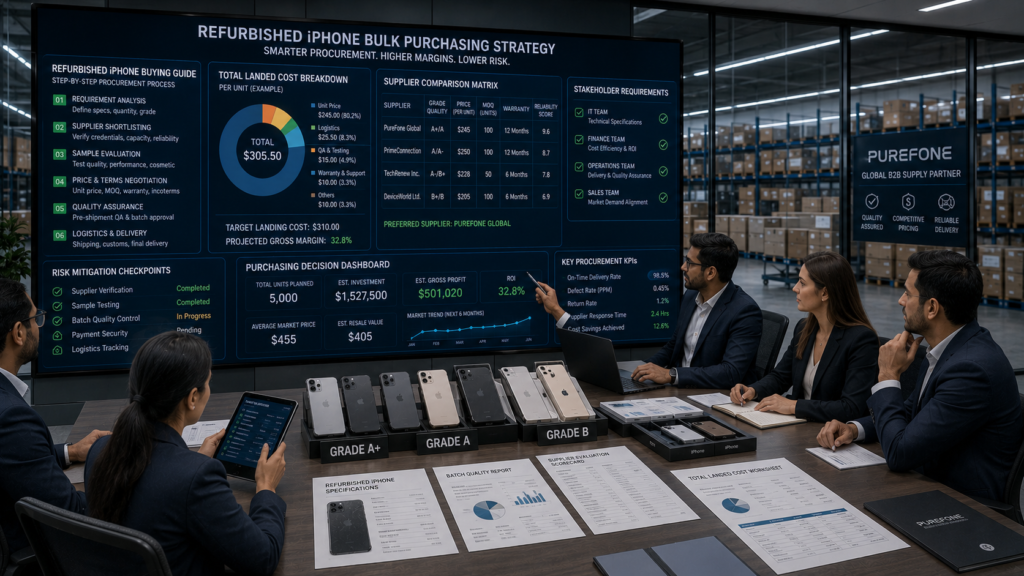
The first step in leveraging a buying guide effectively is to align product specifications with the specific use case of the end-user. For corporate clients deploying devices to field teams, the priority might be durability and battery life, whereas for retail customers, cosmetic perfection might be paramount. A tailored refurbished iPhone buying guide allows the buyer to specify these requirements clearly to suppliers, preventing the delivery of stock that is technically functional but unsuitable for the intended market.
This level of customization in the buying process helps in filtering out suppliers who cannot meet the exacting standards required for specific B2B applications. It transforms the transaction from a simple commodity purchase into a strategic sourcing exercise that delivers precise business outcomes.
Furthermore, the buying guide must establish clear protocols for dispute resolution and returns management. In bulk orders, discovering a defect rate of 5% after delivery is a major logistical challenge. A proactive buying guide will define the acceptable threshold for defects (often referred to as the “dead on arrival” or DOA rate) and the procedure for addressing units that fall short of these standards.
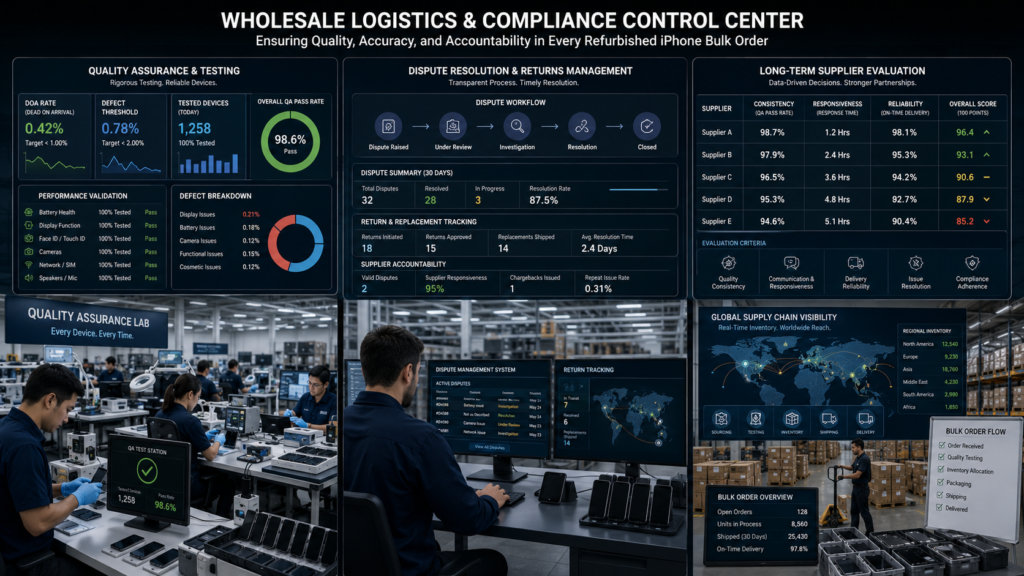
This includes stipulating whether the supplier will ship replacements immediately or wait for the return of the defective units. By codifying these terms upfront, based on a shared understanding of the refurbished iPhone quality check, both parties enter the transaction with clear expectations, reducing the potential for conflict and accelerating the resolution of any issues that do arise.
Finally, the buying guide should incorporate a mechanism for evaluating the long-term reliability of the supplier. The relationship with a wholesaler is not a one-off event but an ongoing partnership. The guide should include criteria for assessing the supplier’s consistency, responsiveness, and willingness to stand behind their product over time. As market conditions shift in 2025 and beyond, having a stable network of reliable suppliers will be a key differentiator. Therefore, the buying guide is not just a tool for purchasing inventory; it is a framework for building a resilient supply chain capable of weathering fluctuations in availability and price, ensuring that the wholesale business remains agile and competitive in a dynamic market.
2.1 Why Supplier Vetting is the First Line of Defense
Supplier vetting is the most critical step in the wholesale procurement process, acting as the primary filter against poor quality and fraud. The secondary market is fragmented, with a wide disparity in the capabilities and integrity of refurbishers. Some facilities operate with clean rooms, advanced diagnostic tools, and skilled technicians, while others may operate out of warehouses with minimal quality control. Thorough vetting allows the buyer to distinguish between these extremes, ensuring that they partner with suppliers who share their commitment to excellence. This process involves auditing the supplier’s refurbished iPhone quality check procedures, verifying their certifications, and checking references from other wholesale clients. Skipping this step is akin to playing Russian roulette with inventory quality.
A deep dive into the supplier’s sourcing chain is an essential component of vetting. Understanding where the supplier acquires their devices—whether from trade-in programs, carrier leases, or liquidation sales—provides insight into the likely history and condition of the stock. Devices sourced from corporate trade-ins, for example, are generally better maintained than those sourced from individual consumer returns. A sophisticated refurbished iPhone buying guide will include questions about the provenance of the inventory, requiring the supplier to provide transparency regarding the origin of the devices. This visibility helps the buyer assess the risk profile of the batch, as certain sources are statistically more likely to yield devices with hidden issues or activation locks.
On-site visits or virtual audits of the refurbishment facility can reveal operational truths that documents and certifications cannot. Witnessing the testing process firsthand allows the buyer to see if the supplier’s claims align with reality. It provides an opportunity to observe the technicians in action, review the refurbished iPhone inspection checklist they use, and assess the general organization and cleanliness of the facility. A supplier that welcomes such audits demonstrates confidence in their processes and transparency in their operations. Conversely, a supplier who refuses access to their quality control operations should be viewed with caution, as it suggests they may have something to hide regarding the standards they apply to their inventory.
Finally, vetting involves a review of the supplier’s financial stability and business continuity. In a volatile market, suppliers facing financial difficulties may cut corners on quality control to reduce costs or rush shipments to improve cash flow. Ensuring that the supplier is financially sound reduces the risk of them going out of business mid-transaction or failing to honor warranty obligations. By treating supplier vetting as a comprehensive evaluation of operational capability, sourcing ethics, and financial health, wholesalers establish a formidable first line of defense. This foundation of trust and competence is essential for navigating the complexities of the bulk refurbished market with confidence.
2.2 How Customization Requests Affect Quality Assurance
Customization has become a significant value-added service in the wholesale mobile market, with businesses frequently requesting laser engraving, specific asset tagging, or pre-loading of corporate software onto devices. While these features enhance brand identity and streamline deployment, they introduce new variables into the quality assurance equation. The process of customizing a device, particularly if it involves disassembly for engraving or parts replacement, carries the inherent risk of inducing damage if not performed with extreme precision.
Therefore, a supplier offering customization services must have an even more rigorous quality control protocol in place than a standard refurbisher. The refurbished iPhone quality check must be performed both before and after the customization process to ensure the device remains in Grade A condition.
Integrating customization into the workflow requires a careful assessment of the device’s structural integrity. For instance, laser engraving on the rear chassis or a specialized trim on the device bezel can compromise the dust and water resistance of the iPhone if not executed correctly. A refurbished iPhone buying guide focused on customized orders should explicitly define acceptable tolerances for these modifications. It must ensure that the cosmetic enhancement does not weaken the device’s housing or interfere with antenna lines. Suppliers must guarantee that their customization technicians are as highly trained as their repair technicians, understanding the delicate anatomy of the iPhone to avoid compromising the device’s functionality during the branding process.
Furthermore, software customization, such as MDM (Mobile Device Management) enrollment or app pre-loading, requires a separate layer of functional testing. After the software image is applied, the device must undergo a full diagnostic sweep to ensure that the new software does not conflict with the hardware or cause unexpected battery drain. The refurbished iPhone inspection checklist for customized units should therefore include a “post-flash” testing phase. This verifies that Wi-Fi, Bluetooth, and cellular modems function correctly after the software installation and that the device can successfully be wiped or enrolled without errors. This step is crucial for corporate clients who rely on seamless integration with their IT infrastructure.
The risk of rework is also heightened with customization. If an error is discovered in the engraving or a software glitch is found post-deployment, correcting it can be time-consuming and costly. In some cases, the device may be permanently damaged and rendered unsellable. To mitigate this, wholesale buyers should request samples of the customized work before approving a full production run. This trial run serves as a final validation of the supplier’s quality assurance capabilities regarding the specific custom requirements. By treating customization as a critical phase in the device lifecycle rather than a final add-on, buyers can ensure that the finished product meets both aesthetic standards and functional reliability.
2.3 Which Red Flags Should Appear in Every Contract
A robust contract is the ultimate safeguard in wholesale transactions, clearly defining the responsibilities of both parties and establishing recourse in the event of failure. While pricing and delivery schedules are standard contract elements, specific clauses related to quality assurance are where the real protection lies. One of the most critical red flags to watch for is the absence of a clearly defined warranty policy. The contract should explicitly state the warranty period for the devices and the process for claiming replacements or repairs.
A vague warranty clause is a major warning sign, suggesting the supplier lacks confidence in their own refurbished iPhone quality check processes. A standard wholesale contract should guarantee a minimum “DOA” (Dead on Arrival) allowance, typically below 2%, with clear terms for exceeding this limit.
Another essential clause involves the specification of “No Original Equipment Manufacturer (OEM) Parts” versus “Refurbished/Aftermarket Parts.” Discrepancies here are a common source of disputes. The contract must specify whether the screens, batteries, and other components are original Apple parts or third-party refurbishments. For buyers seeking premium inventory, the contract should mandate that all critical components be original or certified refurbished. A refurbished iPhone buying guide should be attached as an addendum to the contract, detailing the specific condition and part requirements. Any supplier unwilling to sign off on these specific technical specifications is likely planning to substitute lower-quality parts to increase their margins, which will ultimately degrade the end-user experience.
The contract should also address the issue of activation locks, specifically iCloud, MDM, and carrier blacklists. These are the “kiss of death” for mobile devices, rendering them permanently unusable. The contract must contain a strict guarantee that all devices are free of these locks and have a clean IMEI/ESN. The refurbished iPhone inspection checklist used by the supplier should theoretically catch these, but the contractual guarantee provides the legal backing required to recover funds if a locked device slips through. The contract should stipulate a full refund plus a penalty fee for any device found to be blacklisted or cloud-locked, as this represents a total loss of value for the buyer.
Finally, payment terms and retention clauses serve as financial red flags. A supplier demanding 100% upfront payment for a new business relationship, especially for large bulk orders, poses a significant risk. Conversely, a buyer might seek to retain a percentage of the payment until the devices have been inspected upon arrival. Including an “inspection and acceptance” clause in the contract allows the buyer to verify the quality of a sample batch or the entire shipment before releasing the final funds.
This aligns the financial incentives with the delivery of quality, ensuring that the supplier is motivated to adhere to the agreed-upon standards. Negotiating these terms is not just about financial prudence; it is about establishing a relationship built on accountability and mutual assurance of quality.
2.4 How to Leverage Sample Testing Before Full-Scale Procurement
Sample testing, often referred to as a “pilot batch” or “golden sample” evaluation, is an indispensable strategy for mitigating risk in bulk procurement. Before committing to a large order of hundreds or thousands of units, the buyer should request a smaller, representative batch—typically 5% to 10% of the total order volume—for rigorous in-house testing.
This allows the buyer to apply their own refurbished iPhone quality check protocols to the actual inventory they intend to purchase. It bridges the gap between the supplier’s claims and the reality of the product, providing a tangible validation of the device condition, battery health, and cosmetic grading. This step is the most effective insurance against a “bait and switch” scenario where marketing materials do not match the delivered goods.
The process of sample testing should be thorough and systematic, mirroring the exact inspections that would be performed on the full shipment. This involves utilizing the same diagnostic tools and software that will be used later, ensuring consistency in data. The buyer should scrutinize the sample units for the specific issues most relevant to their end-users, whether that is screen integrity, speaker clarity, or cellular reception. If the sample batch fails to meet the criteria outlined in the refurbished iPhone buying guide, the buyer has the leverage to renegotiate terms, request a different batch, or cancel the order entirely without incurring a massive loss. It is a low-cost method of validating the supplier’s quality assurance ecosystem.
In addition to functional testing, sample testing is the perfect opportunity to evaluate the packaging and logistics quality. Devices that are poorly packaged are more likely to suffer transit damage, which can introduce defects that were not present at the supplier’s facility. The sample batch should arrive in the exact packaging intended for the full order, allowing the buyer to assess the protective measures in place. Furthermore, the inclusion of appropriate accessories—such as cables, chargers, and SIM ejection tools—should be verified against the contract specifications. These ancillary items contribute to the overall “unboxing experience” for the end customer and can affect perceived value if missing or of poor quality.
Finally, the data gathered from sample testing should be documented and shared with the supplier to set a benchmark. If the sample units show minor deviations from the specification but are generally acceptable, this feedback loop allows the supplier to adjust their final quality control pass for the remaining inventory. It establishes a clear standard of expectation. By treating the sample batch as a collaborative quality exercise rather than just a test, the buyer and supplier can align their definitions of quality. This proactive engagement significantly reduces the likelihood of disputes upon the arrival of the main shipment, ensuring a smoother procurement process and a higher quality final product.
3. Which Steps in the Refurbished iPhone Inspection Checklist Prevent Costly Returns?
A comprehensive inspection checklist is the operational backbone of a successful wholesale business dealing in refurbished electronics. It is the tool that transforms subjective opinions about a device’s condition into objective, pass/fail data points. The checklist must be exhaustive, covering every conceivable point of failure, from the aesthetics of the chassis to the深层 functionality of the logic board. For wholesalers, the goal of the refurbished iPhone inspection checklist is to identify and eliminate any unit that could cause a return or a complaint. By standardizing this process, businesses can ensure that no device leaves the warehouse unless it has passed a rigorous gauntlet of tests, thereby minimizing the incidence of costly returns and protecting the brand’s reputation.
The first tier of the checklist focuses on cosmetic and physical integrity. While aesthetics might seem secondary to functionality, they are the primary indicators of how a device has been treated in its previous life. Deep scratches or dents on the chassis often suggest that the device has been dropped, which can cause micro-fractures in the solder joints of the motherboard or damage to internal connectors.
A meticulous inspection will look for signs of liquid damage, not just on the surface indicators but also in the crevices of the SIM tray and charging port. By catching these physical red flags early, the inspector can flag the device for potential internal failure, preventing a unit that looks “okay” on the outside but is compromised on the inside from reaching the customer.
Moving deeper, the checklist must address the critical components that define the user experience: the display and the touch interface. The screen is the most expensive component to replace and the most prone to damage. The inspection must include a test for “dead pixels,” touch sensitivity across the entire surface (checking for “ghost touch” or unresponsive zones), and the integrity of the protective oleophobic coating. For devices targeted at corporate customization, a pristine display is non-negotiable, as any flaw will be immediately noticeable to the end-user and reflect poorly on the supplier. The refurbished iPhone quality check must utilize specialized software that cycles through colors and touch points to ensure the display meets commercial standards.
The third critical tier involves the verification of biometric security features, specifically Face ID. In a business environment, security is paramount, and a device with a malfunctioning Face ID module is significantly less valuable. The inspection checklist must include a test setup that verifies the attention detection features and the speed of the facial recognition. This is often an area where less scrupulous refurbishers cut corners, as the components are delicate and expensive. However, for a wholesale buyer, ensuring that Face ID is fully functional is essential for inventory that promises a “complete” user experience. Any failure in this complex system must result in an immediate fail, as repairing it is often cost-prohibitive and technically demanding.
Finally, the checklist must encompass a deep dive into connectivity and power management. The device must be tested for stable Wi-Fi and Bluetooth connections, checking for dropouts or weak signal strength, which are common symptoms of board-level repairs. The charging and battery health must be verified using diagnostic software that reads the cycle count and the maximum capacity percentage.
A battery that drains rapidly or a charging port that is intermittent will inevitably lead to a return. By enforcing strict thresholds for these metrics, the inspection checklist acts as a final filter, ensuring that only devices capable of sustained, reliable performance make it through to the shipping phase. This systematic approach is the only reliable way to minimize returns and maximize customer satisfaction in the wholesale market.
3.1 Why Cosmetic Integrity Matters in Corporate Customization
In the realm of wholesale and corporate procurement, cosmetic integrity is not merely about vanity; it is about projecting a professional image and ensuring the longevity of the device. When a company equips its workforce with refurbished iPhones, the devices act as ambassadors of the brand. An iPhone with a cracked screen, a scratched chassis, or worn buttons sends a message of neglect and low quality, which can negatively influence client perceptions during meetings or interactions.
Furthermore, for resale purposes, cosmetic condition is the primary differentiator between price tiers. A device that is cosmetically flawless commands a significantly higher price than one with visible wear, making the inspection of the exterior a critical value driver in the refurbished iPhone buying guide.
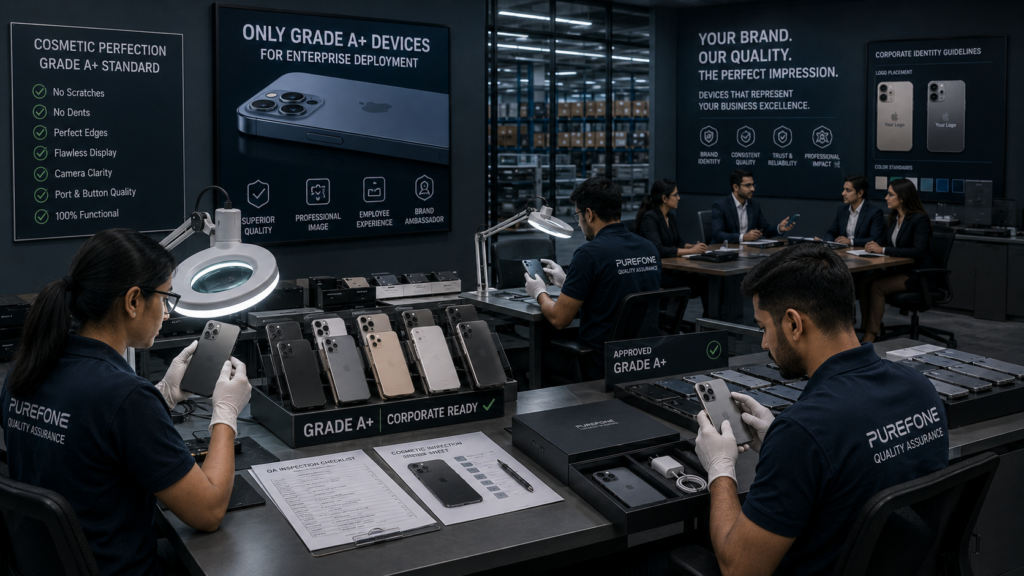
The importance of cosmetic integrity is amplified when customization is involved. Processes such as laser engraving or the application of corporate skins require a pristine surface. If the device housing is already scratched or dented, the engraving may look uneven or highlight the damage, defeating the purpose of the customization. Additionally, applying protective films or skins to a rough surface often leads to peeling or bubbling, which compromises the finish. A rigorous refurbished iPhone inspection checklist must therefore grade the device’s exterior condition before any customization work begins. Ensuring that the chassis and screen are in mint condition allows the customization vendor to deliver a finished product that looks uniform, professional, and brand-appropriate.
There is also a functional correlation between cosmetic condition and device reliability. As mentioned earlier, physical damage is often a symptom of rough handling. A device with significant cosmetic wear may have experienced shocks or drops that have weakened its internal components. For example, a bent frame can put pressure on the logic board, leading to intermittent failures that are difficult to diagnose. By adhering to strict cosmetic standards, buyers effectively filter out units that have a higher probability of latent hardware failures. This proactive approach reduces the likelihood of early-life failures in the field, which are particularly disruptive in a corporate environment where device downtime impacts employee productivity.
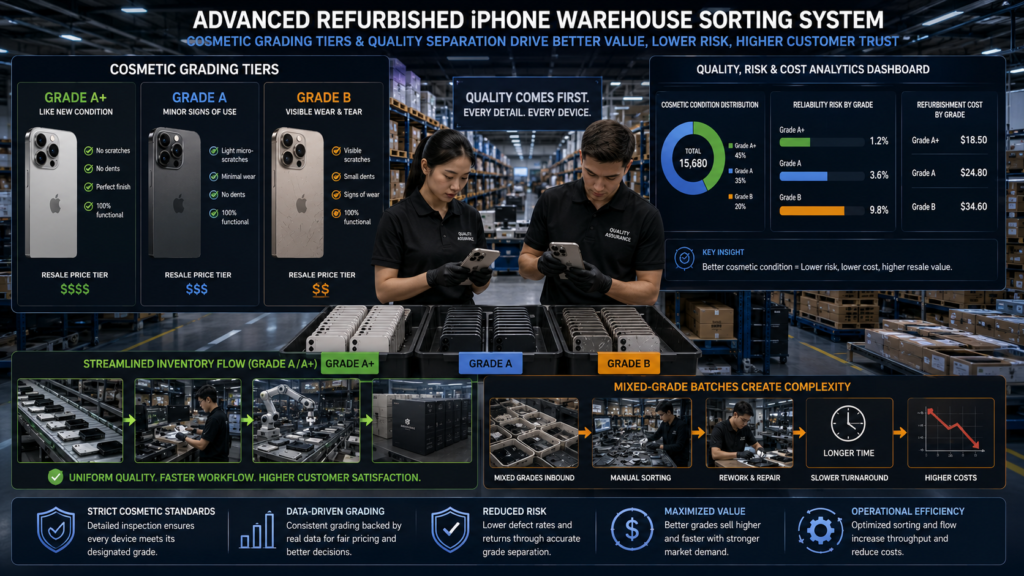
Furthermore, maintaining cosmetic standards simplifies inventory management. When every unit in a batch is cosmetically similar, they are truly interchangeable, streamlining the fulfillment process. If a batch contains a mix of “Grade A” and “Grade B” devices that were accepted due to lax inspection, the warehouse staff must constantly sort and track individual units to ensure the right condition goes to the right customer. This adds complexity and cost. By enforcing a single, high cosmetic standard through a detailed refurbished iPhone quality check, wholesalers can treat their inventory as a uniform commodity, which simplifies logistics and ensures that every customer receives a product that meets the promised aesthetic specifications.
3.2 How to Evaluate Battery Health and Longevity for Enterprise Use
Battery health is arguably the most critical specification for enterprise users, whose workdays often extend well beyond the standard eight hours. A refurbished iPhone with degraded battery capacity cannot support the rigorous demands of business applications, constant communication, and travel without requiring frequent recharging. This creates frustration for employees and operational inefficiencies for the company. Therefore, evaluating battery health goes beyond simply checking if the phone turns on; it requires a scientific assessment of the battery’s chemical condition. The refurbished iPhone inspection checklist must mandate the use of diagnostic software to extract the “Design Capacity” versus “Maximum Capacity” percentage, ensuring that the battery can hold a charge sufficient for a full business day.
Enterprise procurement contracts often stipulate a specific battery health threshold, commonly 85% or higher, as a minimum requirement for device acceptance. However, simply meeting the percentage threshold is not always enough. The cycle count is another vital metric that indicates the battery’s history.
A battery with 85% health but only 50 cycles is vastly superior to one with 85% health and 800 cycles, as the latter is nearing the end of its useful life and will degrade rapidly. A comprehensive refurbished iPhone buying guide should analyze both metrics to assess the remaining longevity of the battery. This depth of analysis ensures that the devices deployed today will continue to perform reliably over the course of a typical 24- to 36-month corporate lifecycle.
The evaluation should also include a stress test to measure battery drain under load. A battery might show a decent capacity at idle but fail catastrophically when processing-intensive tasks like video conferencing or GPS navigation are active. Inspection teams should run a battery load test, monitoring the temperature and voltage drop during usage. Excessive heat or rapid voltage drops indicate internal resistance issues within the battery cells. Such batteries are potential fire hazards and are prone to sudden shutdowns. Identifying these defects during the intake phase prevents safety incidents and ensures that the devices are robust enough to handle the multitasking requirements of modern business workflows.
For wholesalers looking to maximize value, offering a “new battery” option for enterprise clients is a compelling value proposition. In this scenario, the inspection check includes a battery health assessment to determine if a replacement is necessary, followed by the installation of a genuine, high-capacity replacement cell. This resets the longevity clock, providing the client with a device that performs like new in terms of power endurance. By positioning battery health as a serviceable and upgradeable component, wholesalers can tailor their inventory to the high-uptime demands of the B2B sector, distinguishing their offerings from lower-quality competitors who ignore this critical metric.
3.3 Which Functional Tests Ensure Reliability in Business Environments
Ensuring functional reliability in a business environment requires a testing protocol that simulates real-world enterprise usage scenarios. Standard consumer tests, such as playing music or taking a photo, are insufficient for determining if a device is fit for professional use. The refurbished iPhone inspection checklist must include tests for specific business-critical features, such as seamless roaming between Wi-Fi access points, stability during VoIP calls, and compatibility with VPN (Virtual Private Network) clients. A device that drops Wi-Fi signals or struggles to maintain a stable VPN connection is a liability for a remote worker. These tests verify that the wireless radios and antennas are functioning within optimal parameters.
Audio quality is another pivotal functional area for business devices. The speakerphone, earpiece, and microphones must be tested for clarity and volume. In a conference call setting, a malfunctioning microphone or a crackling speaker can derail communications. The inspection should involve recording and playing back audio at various volumes to check for distortion or static. Additionally, the noise-cancellation features should be verified to ensure they function correctly during calls. By prioritizing audio fidelity in the refurbished iPhone quality check, wholesalers ensure that the devices facilitate clear, professional communication, which is a non-negotiable requirement for corporate clients.
Camera functionality is also increasingly important for enterprise, particularly for field service, insurance, and logistics sectors where employees use iPhones to scan documents, capture inventory, or record damage reports. The inspection checklist must test both the rear and front cameras for focus accuracy, shutter speed, and lens clarity. The test should check for “purple haze” or other artifacts that indicate sensor damage. Flash functionality must be verified, as must the microphones associated with video recording. Ensuring the camera system is fully operational guarantees that the device can support the growing array of business applications that rely on visual data capture.
Finally, the inspection must include a comprehensive test of the charging and data transfer port. The Lightning or USB-C port is subjected to significant wear and is a common point of failure. The test should verify that the device charges consistently and that data transfer speeds are stable when connected to a computer. Intermittent charging issues, often caused by lint buildup or bent pins, are a frequent cause of user frustration.
By physically cleaning the port and testing it with multiple cables, the inspector can ensure that the device will reliably charge and sync, which is essential for employees who need to back up data or tether their laptops. This meticulous functional testing ensures the device is a robust tool for business, rather than a source of technical headaches.
3.4 How to Verify Authenticity of Parts and Software Security
In the refurbished market, the authenticity of parts is a major concern, as the use of counterfeit or low-quality aftermarket components can severely degrade device performance and safety. For wholesale buyers, verifying that the device contains genuine parts is a critical component of the refurbished iPhone inspection checklist. This verification can be complex, as counterfeit parts have become increasingly sophisticated. However, tell-tale signs often remain. Inspectors should check for proper color calibration on the display, accurate True Tone functionality (which often fails with third-party screens), and the presence of original Apple serial numbers on internal components matching the device’s logic board.
Tools that communicate with the device’s chip to verify the presence of genuine cameras and batteries are becoming essential for high-volume wholesale inspections.
The integrity of the biometric sensors is a key indicator of parts authenticity. As mentioned, Face ID is deeply integrated into the secure enclave of the iPhone. If a device has a repaired or replaced screen that is not genuine, or if the front-facing sensor array has been tampered with, Face ID will often fail or show an error message. A strict inspection protocol will test Face ID rigorously, and if it fails, the device is rejected or downgraded.
This is because restoring Face ID to full functionality on a device with non-genuine parts is often impossible. For enterprise clients who rely on biometric security for device access, the presence of genuine, verified components is not optional; it is a mandatory requirement for data security.
Software security is the other half of the authenticity equation. A device must be free of any jailbreaks, unauthorized modifications, or hidden malware that could compromise corporate networks. The inspection checklist should include a check of the device’s diagnostic logs and system status for any signs of tampering. Furthermore, the device must be verified to be activation-lock free (iCloud) and not enrolled in a previous Mobile Device Management (MDM) profile. A device stuck in an MDM is essentially useless to a new owner unless the previous owner releases it. The refurbished iPhone buying guide must guarantee a “clean” device, meaning it is ready for immediate enrollment into the buyer’s own management systems without any residual digital baggage.
Finally, verifying the authenticity of the device’s history via its IMEI or serial number is crucial. Databases exist that can reveal whether a device has been reported lost or stolen, or if it is subject to an outstanding financial contract (blocked). Procuring a blocked device is a total loss, as it cannot connect to cellular networks in most regions.
A thorough quality check process involves running every IMEI through these global databases. This final verification step acts as the ultimate gatekeeper, ensuring that the inventory is legitimate, legal, and ready for deployment in the professional market. By rigorously checking both hardware authenticity and software security, wholesalers protect themselves and their clients from the significant risks associated with counterfeit and compromised devices.
Conclusion
Mastering the procurement and inspection of refurbished iPhones is a sophisticated discipline that requires a blend of technical knowledge, strategic foresight, and rigorous operational controls. As the B2B demand for cost-effective, sustainable technology continues to grow into 2025 and 2026, the ability to deliver consistent, high-quality inventory will distinguish leading wholesalers from the rest of the market. By implementing a robust refurbished iPhone quality check, adhering to a detailed buying guide, and enforcing a strict inspection checklist, businesses can effectively navigate the complexities of the secondary market. These practices are not merely operational tasks; they are strategic imperatives that safeguard profit margins, enhance brand reputation, and ensure customer satisfaction in a competitive landscape.
The emphasis on wholesale and customization within this framework highlights the evolving needs of the enterprise sector. Corporate clients require more than just functioning phones; they demand reliable tools that reflect their professional standards and integrate seamlessly into their IT ecosystems. Whether it is verifying the authenticity of parts for security, evaluating battery health for longevity, or ensuring cosmetic perfection for branding, every step in the quality process adds value to the final product. The integration of 2025 market trends and 2026 projections into these strategies ensures that buyers are not just solving today’s problems but are also future-proofing their supply chains against upcoming shifts in technology and regulation.
Ultimately, the goal of these expert tips is to transform the buying process from a game of chance into a calculated, data-driven investment.The mobile device market is dynamic, but the principles of quality, integrity, and reliability remain constant. Embracing these principles allows businesses to capitalize on the immense opportunities within the refurbished market while avoiding the costly mistakes that can derail success.
Frequently Asked Questions
1. Why is a standardized refurbished iPhone quality check crucial for wholesale orders?
In the wholesale sector, a single error in quality assessment is multiplied across hundreds of units, leading to significant logistical and financial repercussions. A standardized refurbished iPhone quality check ensures that every device, regardless of its origin, undergoes the same rigorous scrutiny for functionality, cosmetics, and security. This consistency is vital for B2B transactions where buyers must trust that the inventory meets a uniform “Grade A” standard without physically inspecting every unit individually before bulk shipping. Without this standardization, the risk of receiving a mixed batch of functional and defective units increases, directly eroding profit margins and damaging business relationships.
2. How does the 2025 market outlook influence the current refurbished iPhone buying guide?
The market outlook for 2025 indicates a shift toward automation in diagnostics and stricter grading standards due to the integration of refurbished devices into enterprise fleets. A modern refurbished iPhone buying guide must now account for these advancements by prioritizing suppliers who use AI-driven diagnostic tools and offer transparent data on device health. As sustainability goals drive corporate procurement, the guide should also emphasize the verification of genuine parts and battery longevity, ensuring that the devices purchased today will remain compliant with the performance and reliability expectations of the corporate market in the near future.
3. What are the financial risks of skipping the refurbished iPhone inspection checklist for bulk purchases?
Skipping the refurbished iPhone inspection checklist exposes wholesale buyers to hidden costs that can devastate profit margins. These risks include high return rates, the expense of warranty servicing, and the administrative burden of managing reverse logistics for defective units. Furthermore, if defective devices reach end-users, the cost of reputational damage can lead to lost contracts that far exceed the value of a single shipment. The checklist serves as a financial filter, identifying potential points of failure before the product leaves the supplier’s facility, thereby protecting the buyer from the “leakage” of profits caused by unexpected returns and repairs.
4. How can sample testing prevent costly mistakes in wholesale procurement?
Sample testing acts as a microcosm of the full order, allowing the buyer to validate the supplier’s claims regarding quality and grading before committing capital to a bulk purchase. By rigorously applying a refurbished iPhone quality check to a representative batch of 5% to 10%, buyers can identify systemic issues such as poor battery health, cosmetic misgrading, or the presence of non-original parts. This step is essential for avoiding “bait and switch” tactics and ensures that the full shipment will align with the refurbished iPhone buying guide specifications, providing a safety net against large-scale procurement errors.
5. Why does cosmetic integrity matter so much when requesting corporate customization?
Cosmetic integrity is the foundation of successful corporate customization. Processes like laser engraving or asset tagging require a flawless surface to ensure the branding looks professional and uniform. If a refurbished iPhone inspection checklist ignores deep scratches or dents, the final customized product will highlight these flaws, resulting in a substandard finish that reflects poorly on the client’s brand. Furthermore, cosmetic damage is often an indicator of rough handling, which can signal underlying internal hardware issues. Ensuring a pristine chassis before customization prevents rework costs and guarantees a premium final product.
6. Which specific battery metrics should be included in a refurbished iPhone inspection checklist?
For enterprise use, a simple “pass/fail” battery test is insufficient. The checklist should verify the maximum capacity percentage (typically requiring 85% or higher) and the cycle count to assess remaining longevity. It should also include a stress test to monitor voltage drop and temperature under load, identifying cells that may fail during intensive business tasks. Including these specific metrics in the refurbished iPhone quality check ensures that the devices can sustain a full workday of constant usage, which is a non-negotiable requirement for corporate clients relying on the phones for productivity and communication.
7. How do 2026 projections impact the way wholesalers should verify parts authenticity today?
Projections for 2026 suggest that regulatory requirements for the “right to repair” and parts transparency will become much stricter. Wholesalers must future-proof their inventory by ensuring all devices contain original or certified components today. This requires a refurbished iPhone inspection checklist that utilizes software tools to communicate with the device’s chips, verifying serial numbers of screens, batteries, and cameras against the logic board. By prioritizing parts authenticity now, wholesalers ensure their inventory remains compliant and marketable in a future where counterfeit components will likely be deemphasized or regulated out of the market.
8. What red flags in a supplier contract indicate a lack of quality assurance?
A major red flag is the absence of a clearly defined warranty policy that covers “Dead on Arrival” (DOA) units and latent defects. If a supplier is unwilling to specify the acceptable DOA rate or provide a guarantee on parts authenticity using the refurbished iPhone buying guide standards, it suggests a lack of confidence in their own quality control. Additionally, contracts that lack clauses regarding MDM (Mobile Device Management) locks or iCloud status should be approached with caution, as these issues render devices useless for enterprise deployment and indicate a failure in the supplier’s initial refurbished iPhone quality check.
9. Why is verifying software security and IMEI status essential for the refurbished iPhone buying guide?
For B2B buyers, a device that cannot be enrolled in corporate management systems is a total loss. The buying guide must mandate that the IMEI is clean (not blacklisted or reported lost) and that the device is free from previous MDM profiles and iCloud locks. This verification is a critical step in the refurbished iPhone inspection checklist because it ensures the device is legally owned and technically ready for immediate deployment. Overlooking this can lead to security breaches and the inability to configure devices, resulting in significant operational delays for the end-client.
10. How does a rigorous quality check process improve customer retention in wholesale deals?
Consistency is the key to retention in the wholesale industry. When a buyer receives a batch of iPhones that consistently meet the specifications promised in the refurbished iPhone buying guide, they are able to trust their supplier for future procurement needs. A rigorous refurbished iPhone quality check eliminates the variability that causes frustration and disputes. By delivering a reliable product that performs as expected, wholesalers build a reputation for excellence and reliability, fostering long-term partnerships that are essential for success in the competitive B2B mobile device market.


